The first cold snap in Maiden catches a lot of haircuts off guard. A tight summer fade that felt clean in August can feel exposed in November, dry air turns tidy hair static-prone, and hats spend half the day flattening whatever you styled in the morning. Changing your cut for fall and winter is not about a new look for its own sake. It is about adjusting length, product, and routine to weather that behaves differently.
Use this checklist in order, sometime around the first real cold front. Each line has a clear pass or fail, so you can tell what actually needs to change and what can stay as it is.
Start with length and coverage
Cold wind finds short sides first. If your ears and neck feel the weather through your cut, a little more length on the sides and back buys real comfort without changing your style's identity. Growing out does not mean letting it go shaggy; it means asking for the same shape with the guards one or two steps longer, and cleaning the edges so the extra length looks chosen.
The checklist below works whether you keep a fade, a classic scissor cut, or something longer on top.
The fall switch checklist
- Sides and back: Can you feel cold wind directly on your scalp? If yes, add length at your next cut; if the cut still insulates, leave it alone.
- Neckline: Is the back edge growing fuzzy between cuts? Plan a quick neck clean-up mid-cycle, because scarves and coat collars make a rough neckline more visible, not less.
- Top length: Does your style rely on height that a hat destroys? If yes, either grow the top enough to restyle after the hat comes off, or switch to a flatter, textured shape for the season.
- Scalp condition: Flakes showing up on dark sweaters that never appeared in summer? That is dry air talking; adjust washing and moisturizing before assuming dandruff.
- Product weight: Is your summer gel or light pomade giving up by midday in dry air? A slightly heavier, creamier product usually holds better once humidity drops.
- Static test: Does your hair lift and cling after you pull off a hat or sweater? Static means the hair is dry; more conditioner and less hot water help more than more product.
- Beard check: Is your beard looking wiry and dull as the air dries? A few drops of beard oil worked through after a shower makes a bigger difference in winter than any trim schedule.
Dry air changes the routine, not just the cut
Piedmont winters are not brutal, but indoor heat runs for months and the air in most houses and shops gets dry enough to change how hair behaves. Hair loses moisture to that air all day. The results are predictable: more static, more frizz at the edges, ends that feel rough, and a scalp that itches and flakes even on men who never have trouble in July.
The adjustments are small. Wash a little less often if your scalp allows it, since every wash strips oil the dry air is already taking. Use warm water instead of hot in the shower. Work conditioner in and actually leave it for a minute before rinsing. None of this requires new equipment, and most men feel the difference within a week.
Hat season strategy
A hat is not the enemy of a haircut; an unplanned hat is. Tobacco-road wind aside, the practical problem is compression: a knit hat presses hair flat and warm, and hair cools in whatever shape the hat left. Styles that survive hats share a few traits. Texture on top instead of height. A shape that looks fine combed with fingers. Product applied after the hat comes off, not before, for the final fix.
If your job keeps a hat or hard hat on all day, tell your barber. At Deaton's Barber Shop, that one detail changes the recommendation from a styled top to a cut whose shape is built into the haircut itself, needing nothing but a quick hand-comb at lunch.
Timing the grow-out
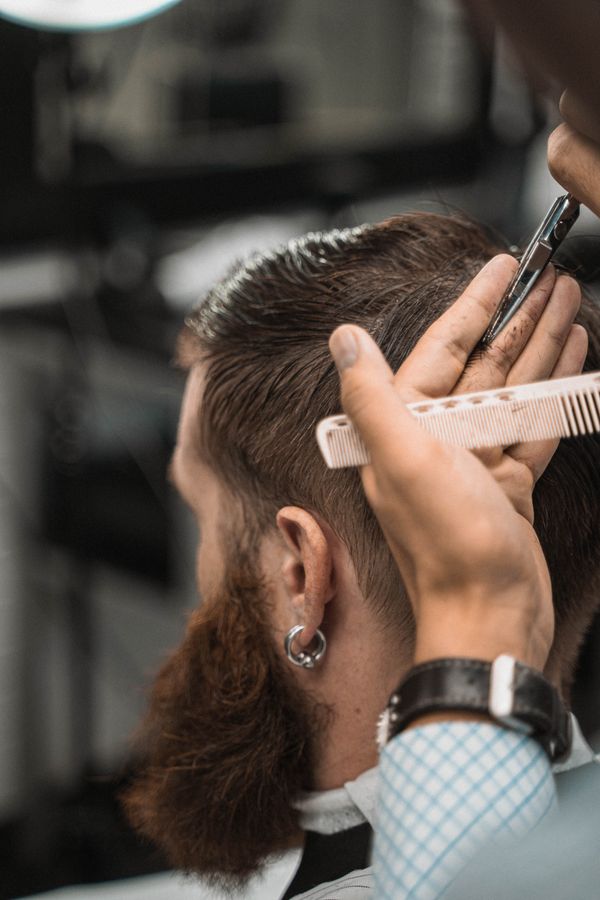
Hair grows roughly half an inch a month, so a seasonal switch is a two-visit plan, not a single appointment. Start in early fall: keep the shape, add a little length, clean the neckline and edges. By the time real cold arrives, the second visit sets the winter version properly. Men who wait until December and ask for a longer cut in one sitting usually end up with an in-between shape through the holidays, which is the worst of both options.
The reverse trip matters too. When spring pollen and humidity return, do not hack the winter length off at home. Book the cut, bring the shape back down in one visit, and the summer version starts clean.
Common questions
Should everyone grow their hair longer for winter?
No. Men who work indoors and like a tight fade can keep it year-round. The switch matters most if cold wind, static, dry scalp, or daily hat wear is actually bothering you.
Why does my scalp flake only in winter?
Dry indoor air and hotter showers pull moisture from the scalp, and the flakes are usually dry skin rather than dandruff. Moisturizing and gentler washing fix most cases; flakes that persist with itching deserve a closer look.
When should I start the fall switch?
At the first cut after nights start dropping into the forties. That timing gives you one transitional cut and one full winter cut before the coldest weeks arrive.
Photos in this guide are representative stock images.
← All guides from Deaton's Barber Shop← Back to Deaton's Barber Shop