A straight-razor shave is the oldest service in a barber shop, and for a first-timer it can look more dramatic than it feels. The reclined chair, the hot towels, the blade: it is a deliberate, unhurried process, and knowing the order of events takes the mystery out of it. This is a practical walkthrough of what happens, what you can do at home with a safety razor using the same principles, and where the professional line sits.
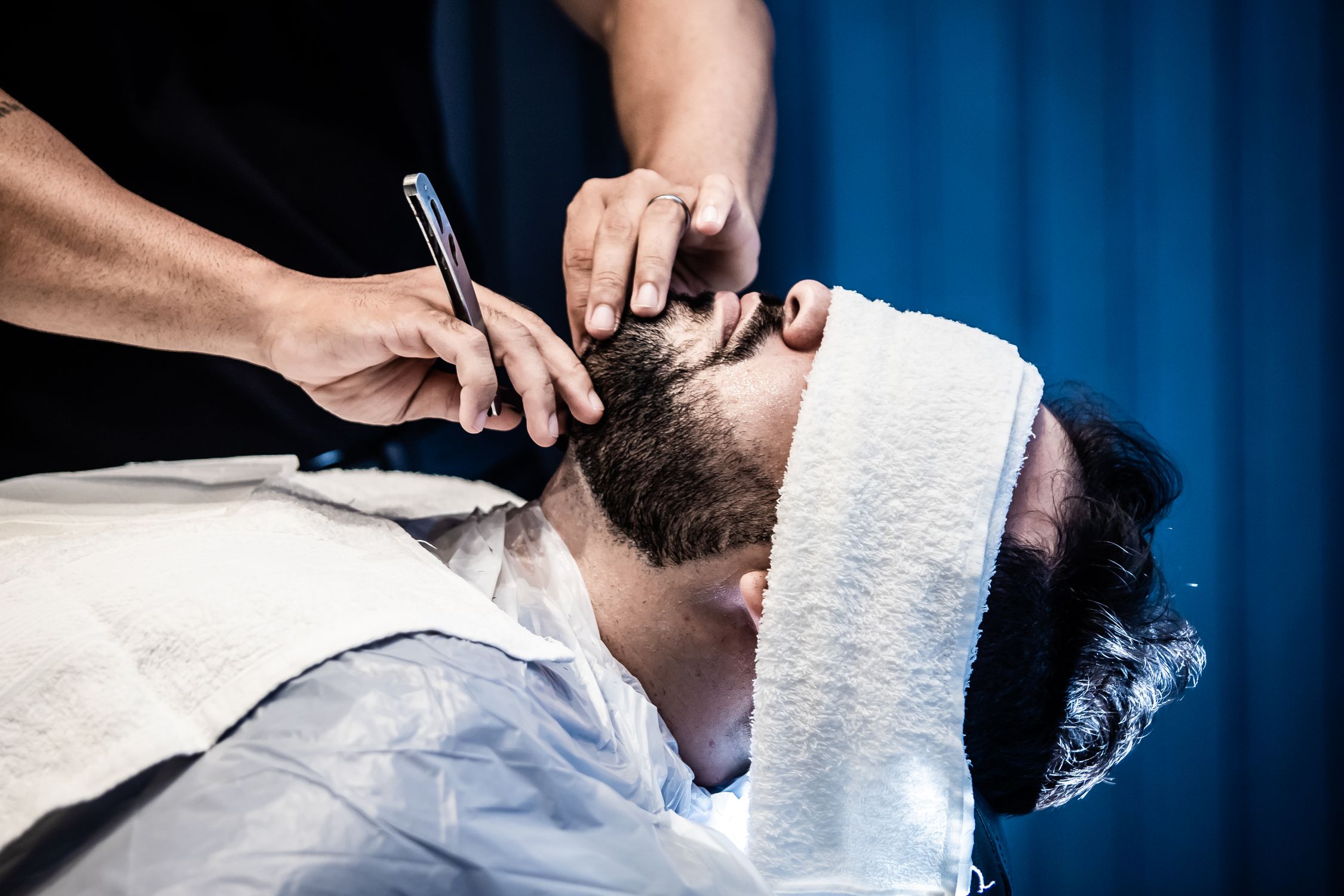
Shops in Maiden, including Deaton's Barber Shop, list hot towel shaves because the towel is not decoration. It is step one of the shave itself.
Before the blade: preparation does the heavy lifting
Most of a good shave happens before any steel touches skin. A hot, damp towel rests on the face for a few minutes. The heat and moisture soften beard hair considerably; a softened whisker cuts with far less force, which means less dragging, less irritation, and fewer nicks. The barber may apply a pre-shave oil or a first layer of lather under or after the towel, especially on coarse beards.
Lather comes next, worked up and applied in circular strokes that lift the hair and coat the skin. Shaving cream from a can is mostly propellant and thin foam; proper lather is denser, wetter, and built to stay slick for the full pass. If you shave at home, this is the upgrade that changes everything: warm water, time, and real lather matter more than the razor you own.
The shave itself, pass by pass
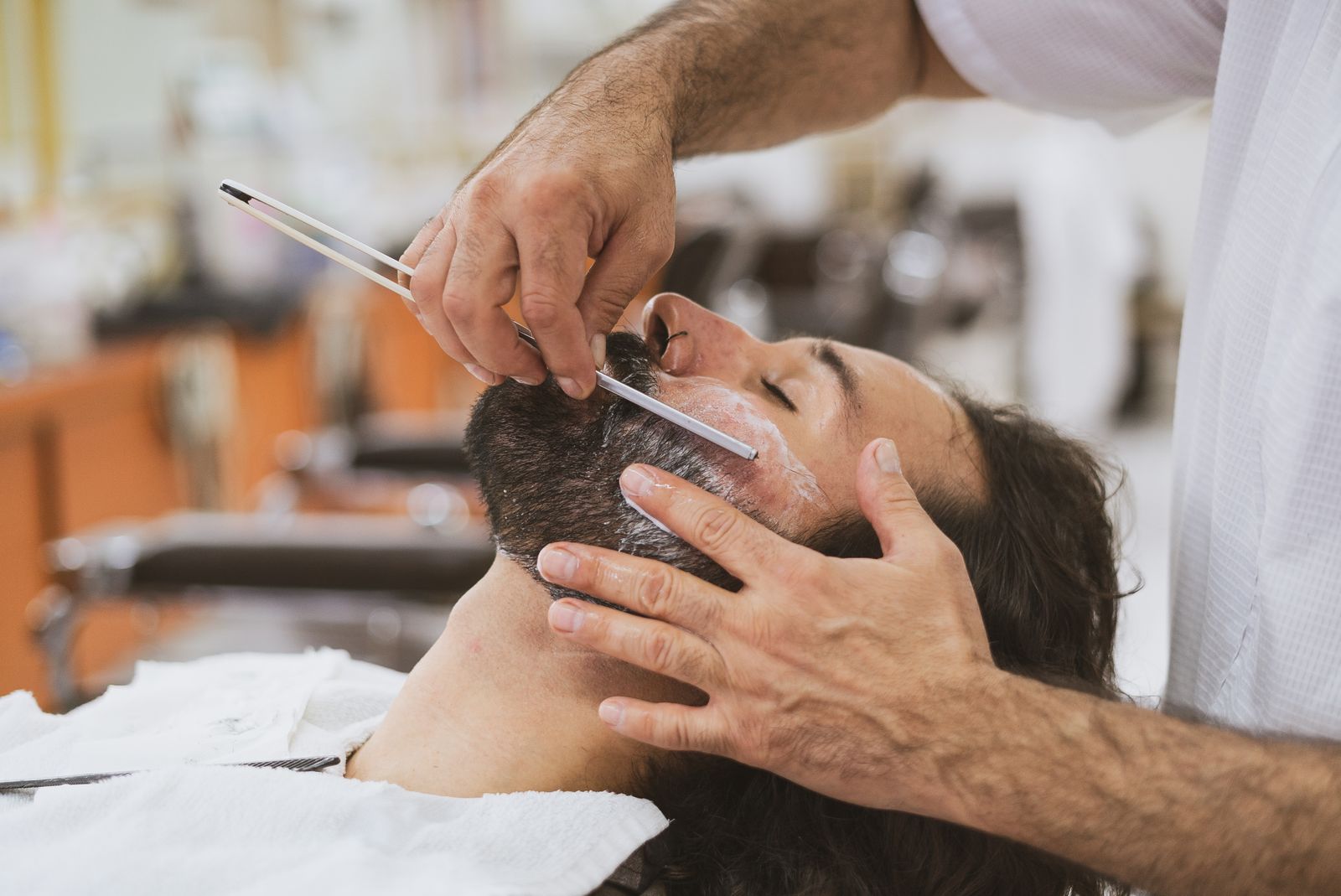
- First pass, with the grain. The barber works in short strokes, following the direction your beard grows, stretching the skin gently with the free hand. This pass removes the bulk of the hair without pushing the blade against growth.
- Re-lather. A second coat of lather goes on. Skipping this at home is where most irritation starts; a second pass over bare or dry skin is a razor burn recipe.
- Second pass, across or against the grain. Depending on your skin, the barber goes across the grain or lightly against it for closeness. Sensitive skin often stops at across-the-grain, and a good barber adjusts rather than forcing the closest possible result.
- Detail work. Edges around the mustache, sideburns, and neckline get cleaned up, and any missed patches, which usually hide under the jaw, are caught by feel as much as by sight.
- Cold towel close. A cool towel follows. It feels good, and it also calms the skin and helps settle the minor redness a close shave can leave.
- Aftercare. Aftershave or balm goes on last. Alcohol-heavy splashes sting and dry; balms with soothing ingredients suit most men better, especially in winter.
What it should and should not feel like
A good razor shave feels like light, deliberate strokes, not scraping. You will hear the blade more than you feel it. Small tugs usually mean a section was drier or coarser, and the barber will add lather or another warm towel rather than push through. Speak up if something stings or pulls hard. Barbers would rather adjust mid-shave than have you leave irritated.
Afterward, mild tightness is normal and fades within the hour. Bumps, burning that lasts into the next day, or patches of ingrown hairs over the following week are not normal, and they usually trace back to too many passes, too much pressure, or skin that needed a gentler plan.
Who should skip it, or ask first
Some skin and some situations call for a pause. Active acne, eczema or psoriasis flares on the face, sunburn, and open cuts are reasons to reschedule; a blade passing over broken skin spreads irritation and bacteria. Men on blood-thinning medication, or acne medication that thins and sensitizes the skin, should mention it beforehand, because small nicks bleed longer and skin reacts more strongly. This is general information, not medical advice for your situation; when in doubt, the dermatologist's answer outranks the barber's.
Moles and raised spots are not automatic deal-breakers, but point them out. A barber who knows where they are will work around them instead of discovering them mid-stroke.
Taking the principles home
You do not need a straight razor at home to use the method. Shower or hot-towel first, real lather, one pass with the grain, re-lather, one pass across, cold rinse, balm. Change blades often, since a dull blade is the single biggest cause of home shaving irritation. The shop shave remains the closer, calmer version, and for many men an occasional one doubles as a reset when home shaves have been going badly.
Common questions
Does a straight-razor shave hurt?
Done properly, no. You feel light strokes and the warmth of the towels. Persistent pulling or burning means the prep was short or the skin is sensitive, and a good barber will adjust the passes.
How close is the shave compared with a cartridge razor?
Typically closer, because the barber makes multiple prepared passes at different angles with the skin held taut. Most men stay smooth noticeably longer, often into the second day.
How should I prepare before my appointment?
Arrive with a day or two of growth if you can, skip exfoliating that morning, and mention any medications, moles, or skin conditions when you sit down. That short conversation prevents most problems.
Photos in this guide are representative stock images.
← All guides from Deaton's Barber Shop← Back to Deaton's Barber Shop